
Little House on the Prairie
Basic facts
Little House on the Prairie is a children’s novel by the American writer Laura Ingalls Wilder. Harper & Brothers first published it in the United States on September 19, 1935. It is commonly described as children’s historical fiction, a family saga, and a western or pioneer novel. The book is the third volume published in the Little House series, although its narrative position is earlier than Farmer Boy, which follows the childhood of Almanzo Wilder. Drawing on Wilder’s early life, it recounts the Ingalls family’s move from the Wisconsin woods to the prairie of Montgomery County, Kansas, in 1869–70.
Story
The narrator is the young Laura. Her father, Charles “Pa” Ingalls, believes that the Wisconsin woods are becoming crowded with settlers and that the family needs a new place to live. He therefore loads his family—Caroline, Mary, Laura, and baby Carrie—into a covered wagon and heads west. The journey crosses changing landscapes and difficult waterways. Pa hunts for food, Ma preserves order and supplies, and the children gradually learn that travel and settlement require constant work. Their dog, Jack, is a loyal companion and an important source of security for the girls.
On the Kansas prairie the family builds a one-room log house, digs a well, gathers fuel, stores food, and begins a farm. The open land is beautiful but dangerous. Wolves howl around the house at night; severe weather, illness, fire, flooding, and isolation threaten the family’s plans. Episodes involving neighbors, trade, shared assistance, and Christmas show that pioneer life is not only a sequence of disasters. It also contains companionship, ingenuity, celebration, and tenderness. When questions concerning the land and the government’s settlement arrangements make the family’s position uncertain, Pa must eventually reconsider remaining there. The home they have built is real and beloved, yet the family’s life remains shaped by movement.
Themes and historical perspective
The central theme is family cooperation under pressure. Pa’s hunting and restless desire for a new frontier contrast with Ma’s discipline and practical household labor, while Laura’s curiosity turns daily tasks into lessons about responsibility. Wilder gives unusual narrative importance to making candles, sewing, cooking, preserving meat, milking, building, and storing provisions. In this way, “pioneering” becomes more than a heroic adventure: it is the accumulation of repetitive labor that makes survival possible. Laura experiences the prairie as both frightening and wondrous, learning courage through wolves, storms, illness, vast skies, and grass fires.
The novel also requires historical awareness. The family settles on land inhabited by the Osage people, while the narrative reflects the nineteenth-century white belief that the prairie was available for settlement. Modern readers can recognize the Ingalls family’s genuine hardships while also questioning the idea of an “empty” frontier and considering the displacement of Indigenous peoples. The book is autobiographical in foundation, but it is not a verbatim historical record. Wilder shaped memories into a carefully paced literary narrative, compressing time and presenting events through a child’s perspective.
Background and legacy
Wilder began turning memories of childhood and family migration into publishable writing in the 1920s and 1930s. Her daughter, Rose Wilder Lane, assisted with the preparation and development of manuscripts, an aspect of the books’ authorship that has remained important to biographers and critics. The series began with Little House in the Big Woods in 1932, and further volumes followed through the 1930s and 1940s. Wilder’s plain, vivid prose made domestic work, seasonal change, danger, and family affection accessible to young readers without making the frontier seem effortless.
The Little House books have been repeatedly reprinted, translated widely, and adapted for television and other media. Together they have sold tens of millions of copies in more than one hundred countries, making Wilder one of the most recognizable figures in American children’s literature. The series has also inspired continuing debate about pioneer mythology, Indigenous representation, historical accuracy, and the creative relationship between Wilder and Lane. Little House on the Prairie endures as an adventure story and family narrative, but its lasting importance also lies in the questions it invites readers to ask about whose land is being described, whose labor sustains a household, and how personal memory becomes cultural history.
About the Author
Early life
Laura Elizabeth Ingalls Wilder was born on February 7, 1867, near Pepin, Wisconsin, in the Big Woods. Her parents were Charles Phillip Ingalls, a farmer and hunter, and Caroline Lake Ingalls, who valued education, order, and family life. Laura was the second of five children. Her older sister was Mary, and her younger sisters were Carrie and Grace; her younger brother, Charles Frederick, died in infancy. The family moved repeatedly, living at different times in Wisconsin, Minnesota, Iowa, and Dakota Territory. As a child, Laura experienced covered-wagon travel, house building, farm labor, uncertain harvests, severe weather, illness, and the emotional strain of continual relocation.
Those experiences became the foundation of her later fiction. Mary eventually lost her sight, and the family also endured limited medical care, financial difficulty, and the death of a child. During the years near De Smet, South Dakota, they faced one of the region’s notably harsh winters. Laura received the elementary schooling available in the settlements where she lived, but she remained an eager reader and became independent early. At fifteen she obtained a teaching certificate and began working in rural schools. Teaching gave her an income and exposed her to the social life of frontier communities, as well as to the routines and concerns of children.
Marriage and literary career
In 1885 Laura married Almanzo Wilder. They farmed together and experienced poverty, crop failures, illness, and family loss, along with the effort required to build a more secure household. They had two children, including Rose Wilder Lane, who later became a writer and editor. Laura was not initially a professional novelist. She spent many years managing a farm and a family while gradually developing a writing career for adult readers. Beginning in 1911, she wrote a newspaper column focused on farm women, rural life, household economics, and women’s experiences. In the 1920s she began shaping memories of her youth into stories intended for publication.
Rose Wilder Lane assisted with the preparation and development of the manuscripts. The nature and extent of that collaboration remains an important subject for biographers, but Laura was the author whose name defined the series. The books include Little House in the Big Woods (1932), Farmer Boy (1933), Little House on the Prairie (1935), On the Banks of Plum Creek (1937), By the Shores of Silver Lake (1939), The Long Winter (1940), Little Town on the Prairie (1941), and These Happy Golden Years (1943). The First Four Years, about Laura and Almanzo’s early married life, was published posthumously in 1971. Together, the books transform the family’s movements through Wisconsin, Kansas, Minnesota, and Dakota Territory into a broad narrative of American childhood and settlement.
Later years and reputation
Wilder spent her later years in Mansfield, Missouri, where sites associated with her life are now preserved. She died there on February 10, 1957, at the age of ninety, and was buried in the Mansfield Cemetery. The Association for Library Service to Children originally named its children’s literature heritage award after her, and she was its first recipient.
Her reputation rests on more than popularity. In clear, economical prose, she made seasonal change, domestic work, family affection, and practical ingenuity central subjects of children’s literature. The Little House books have been translated, reprinted, adapted for television, and read across generations worldwide. They have also prompted sustained discussion of historical accuracy, the role of Rose Wilder Lane, pioneer mythology, and the books’ treatment of Indigenous peoples and westward expansion. Wilder’s stories are based on memory but are shaped as literature rather than presented as complete historical records. Reading her today therefore involves both appreciation and examination: her work remains a powerful family narrative and a defining achievement in American children’s literature, while its assumptions invite readers to think critically about land, migration, labor, and the making of cultural memory.
StoryFlow
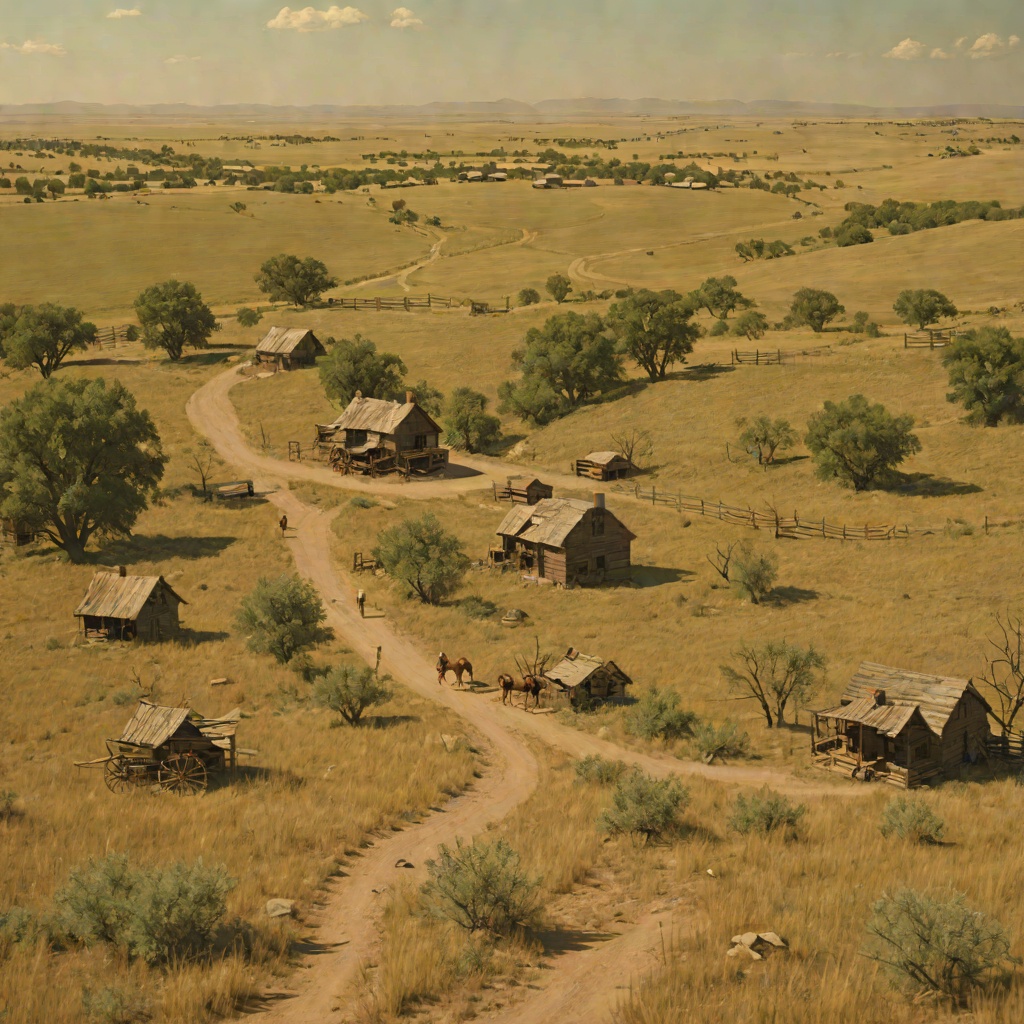
The Journey West to Indian Territory
This flow traces the Ingalls family's overland passage from Wisconsin through the Mississippi Valley and into the Kansas prairie, ending with their first sight of the High Prairie.
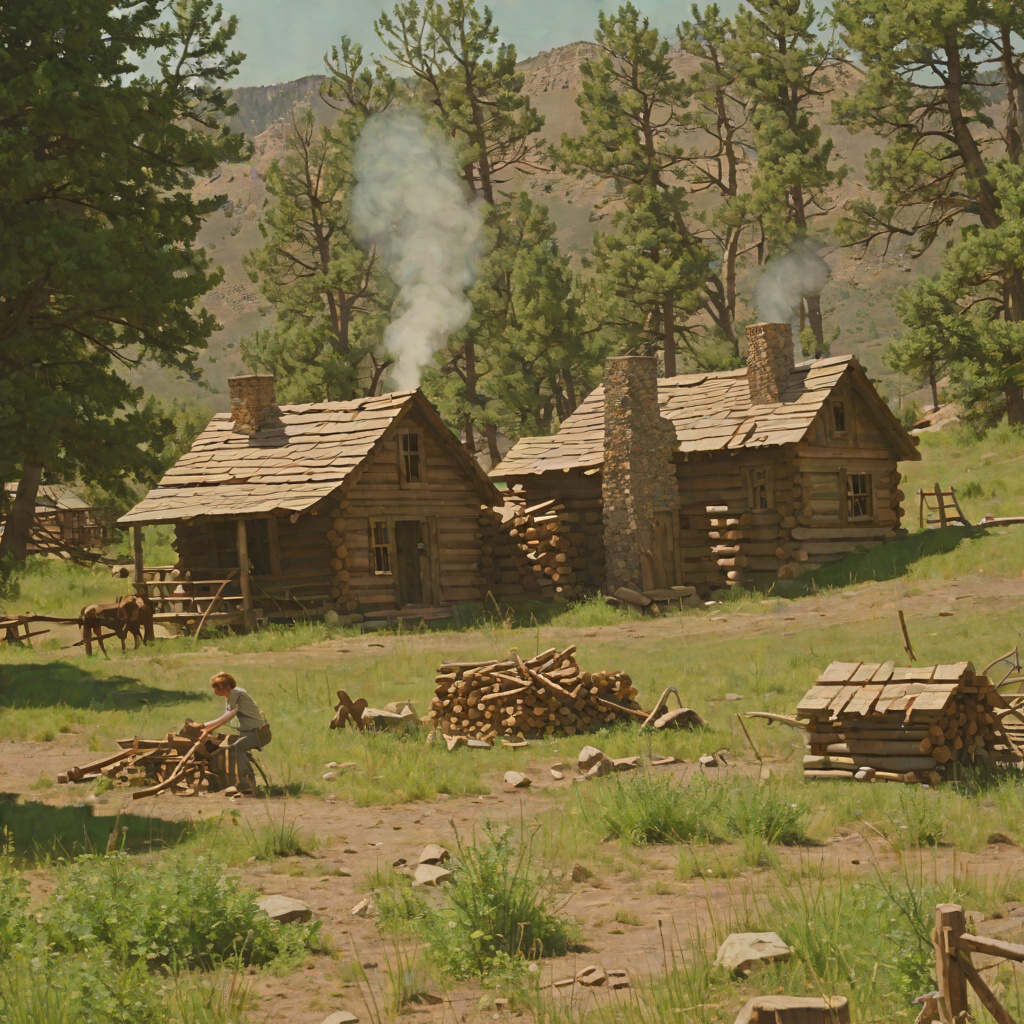
Raising the Little House on the Prairie
This flow follows the construction of the log house from the first logs at the creek to the finished door, floor, roof, and fireplace.
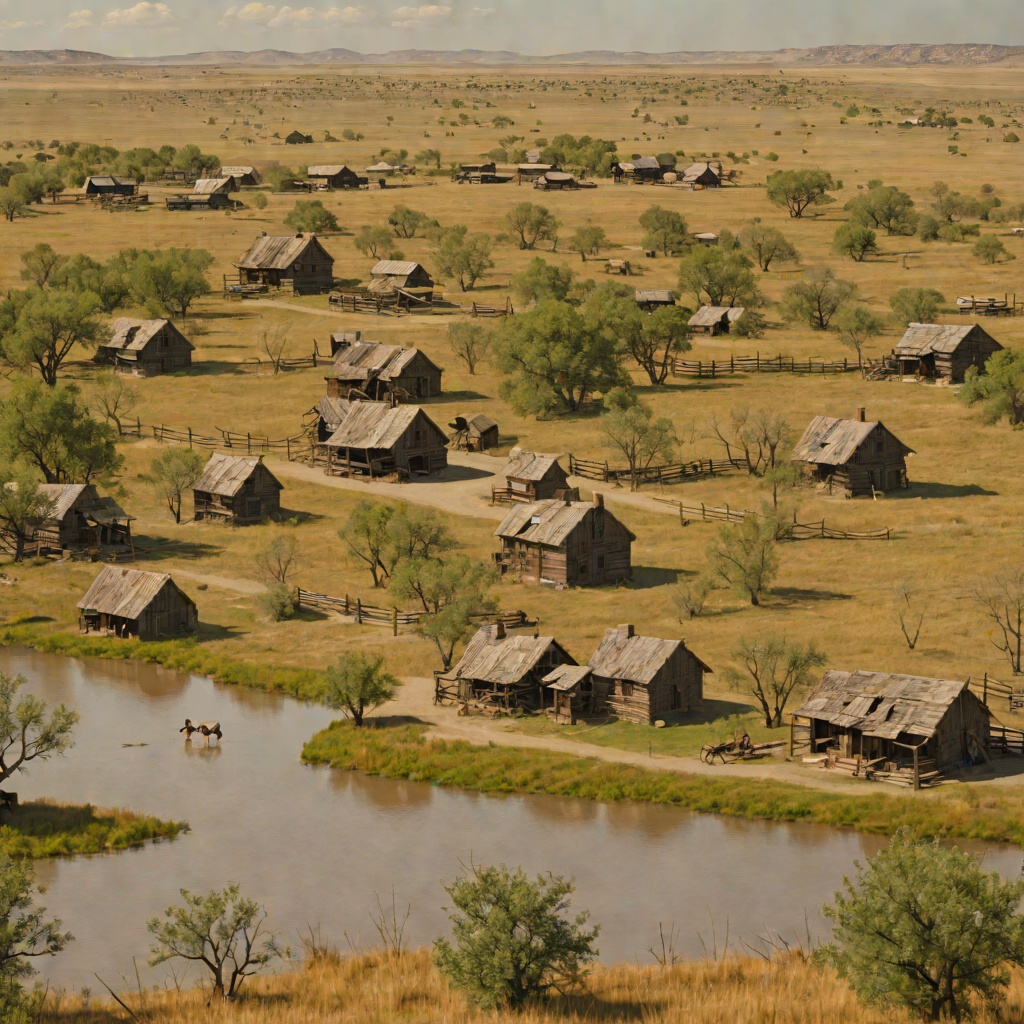
The Settlement Year in Indian Territory
This flow traces the turning seasons of the Ingalls family's first year, from summer pastures to winter floods, fever, and the spring crisis.
